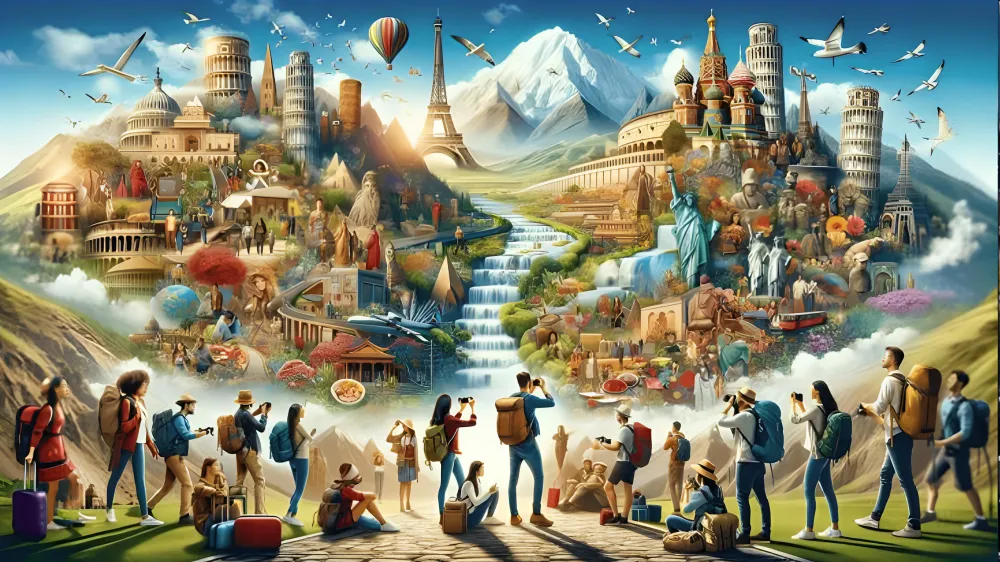
The world often appears fragmented when viewed through borders, headlines, or isolated stories. However, when observed with depth and continuity, a broader pattern begins to emerge. This broader pattern is what many describe as the Panorama of World Alaikas, a way of understanding the planet as a connected system rather than a collection of separate regions.
This concept focuses on how landscapes, cultures, historical experiences, and modern transformations interact with one another across the globe. It encourages readers to step back from narrow viewpoints and understand how global life unfolds as a shared experience. Instead of emphasizing difference alone, it highlights relationships, influence, and continuity. This article explains the meaning, structure, and relevance of the Panorama of World Alaikas in detail.
What Is Panorama of World Alaikas?
The concept of Panorama of World Alaikas refers to a wide-angle understanding of the world where geography, culture, history, and modern life coexist as part of one continuous system. It does not treat countries or communities as isolated entities. Instead, it views them as interconnected parts of a larger global framework.
This perspective emphasizes relationships rather than separation. Mountain regions influence climate patterns that affect distant coastlines. Trade routes shape cultural habits far beyond their origin points. Historical events continue to guide modern political and social systems.
By adopting this view, the world becomes easier to understand. Patterns replace confusion, and connections replace assumptions. This approach allows individuals to interpret global developments with context instead of surface-level judgment.
Why the Panorama of World Alaikas Matters in the Modern World?
In today’s interconnected environment, local decisions often carry global consequences. Economic policies, environmental actions, and technological shifts rarely remain confined to one region. The Panorama of World Alaikas helps explain how these connections function in practice.
This perspective matters because it reduces oversimplification. Instead of blaming or praising individual regions, it encourages understanding the systems behind outcomes. Global challenges such as climate change, migration, and digital transformation require this broader lens to be addressed effectively.
Understanding the global panorama also improves communication. When people recognize shared challenges and influences, cooperation becomes more achievable. This awareness supports long-term stability and informed decision-making.
Panorama of World Alaikas Geography as the Structural Base of the Global Picture
Geography provides the physical foundation for the global panorama. Climate, terrain, and access to natural resources shape how societies develop over time. Even with technological advancement, these natural factors continue to influence daily life.
Cold regions often prioritize insulation, efficiency, and preservation. Warmer regions tend to emphasize agriculture, outdoor living, and seasonal rhythms. Coastal areas focus on trade and mobility, while inland regions often build systems around stability and self-sufficiency.
These geographical differences do not create separation. Instead, they contribute variety to the Panorama of World Alaikas, adding depth and balance to the overall global structure.
How Natural Environments Shape Human Behavior?
Human behavior often reflects the environment in subtle but consistent ways. Food choices depend on climate conditions. Housing designs adapt to temperature and terrain. Work patterns adjust to seasonal cycles.
Even communication styles can reflect environmental pressures. Communities in harsh climates often emphasize cooperation, while those in resource-rich regions may prioritize trade and exchange. These patterns develop gradually and become embedded in culture.
When viewed together, these behaviors demonstrate how geography silently influences identity. They form an essential layer within the Panorama of World Alaikas.
Cultural Diversity Within the Panorama of World Alaikas
Culture brings life and meaning to the global picture. Language, music, clothing, rituals, and social customs define how communities express belonging and continuity. These elements carry history forward while adapting to new influences.
In the Panorama of World Alaikas, culture does not remain static. It evolves through interaction. Migration, trade, and digital communication allow traditions to travel while maintaining their core values.
Cultural diversity strengthens the global panorama. It introduces creativity, resilience, and perspective. When preserved and respected, culture becomes a stabilizing force rather than a dividing one.
Cultural Exchange Without Loss of Identity
Cultural exchange is a natural outcome of global connection. Food incorporates new ingredients. Music blends styles. Celebrations adopt new forms of expression.
Before examining examples of exchange, it is important to understand balance. Exchange should expand culture, not replace it. Preservation ensures that traditions remain meaningful even as they evolve.
Common examples of healthy cultural exchange include:
- Traditional recipes adapted with regional ingredients
- Local festivals shared through digital platforms
- Storytelling methods transitioning into modern media formats
These exchanges add layers to the Panorama of World Alaikas without erasing original identity.
Historical Influence Across Regions
History forms the backbone of the global panorama. Past events shape present realities in ways that are often overlooked. Borders, legal systems, and economic structures frequently trace back to earlier decisions and movements.
Empires, trade routes, and migrations created long-lasting connections between distant regions. Architectural styles, social norms, and political frameworks still reflect those influences today.
Understanding these historical layers provides clarity. It explains why certain regions behave the way they do and why global relationships evolve unevenly. History adds depth and continuity to the Panorama of World Alaikas.
The Role of Technology in Global Transformation
Technology has reshaped how the world connects. Distance no longer limits communication. Information travels instantly, allowing ideas to influence multiple regions at once.
This transformation has created new forms of identity and community. Digital spaces now exist alongside physical ones. Work, education, and collaboration increasingly cross national boundaries.
However, technological change is uneven. Some regions adopt innovation rapidly, while others proceed cautiously. This variation adds complexity to the Panorama of World Alaikas, reflecting multiple paths of progress rather than a single direction.
Environmental Responsibility in a Shared World
Environmental challenges highlight the interconnected nature of the planet. Climate change, resource depletion, and biodiversity loss do not respect borders. Their effects spread across regions regardless of origin.
Before reviewing key environmental concerns, it helps to recognize shared responsibility. Some regions experience greater impact despite contributing less to the problem. Addressing this imbalance requires cooperation.
Key global environmental concerns include:
- Rising sea levels affecting coastal populations
- Extreme weather disrupting agriculture and infrastructure
- Resource scarcity increasing economic pressure
Environmental awareness strengthens the global panorama by encouraging collective action.
Sustainability Efforts Across Different Regions
Communities around the world are responding to environmental challenges through sustainability initiatives. These efforts combine traditional knowledge with modern innovation. Before examining specific approaches, it is important to note that sustainability varies by region due to resources and infrastructure.
| Sustainability Focus | Regional Examples |
| Renewable energy | Solar and wind adoption |
| Conservation | Forest and wildlife protection |
| Agriculture | Sustainable farming practices |
| Urban planning | Green infrastructure development |
These efforts contribute positively to the Panorama of World Alaikas by aligning progress with long-term balance.
Shared Human Experiences Across Cultures
Despite visible differences, human experiences share common foundations. People across regions value security, dignity, and opportunity. Families seek stability. Communities aim for growth. Recognizing these similarities reduces misunderstanding. It encourages empathy and cooperation. Differences become sources of learning rather than division. This shared humanity strengthens the Panorama of World Alaikas by emphasizing connection over contrast.
The Individual’s Role in the Global Panorama
Every individual participates in the global system. Daily choices influence supply chains, cultural narratives, and environmental outcomes. Awareness begins at the personal level. Before understanding large-scale impact, it helps to recognize small actions. Consumption habits affect production. Communication shapes perception. Curiosity promotes understanding. Individual responsibility supports the broader Panorama of World Alaikas by aligning personal behavior with global awareness.
Conclusion: Understanding the World Through One Connected Lens
The Panorama of World Alaikas offers a comprehensive way to understand the planet as a living, interconnected system. It brings together geography, culture, history, technology, and environmental responsibility into a single, coherent perspective.
By adopting this view, individuals move beyond fragmented understanding. They gain context, empathy, and clarity. Challenges become shared responsibilities, and progress becomes a collective effort.
Ultimately, embracing the Panorama of World Alaikas allows societies to navigate complexity with awareness and balance. This understanding supports a more informed, cooperative, and sustainable global future.
Read More